



As the seven years of abundance in Egypt drew to a close, a severe famine gripped the land, just as Joseph had foretold. The famine extended beyond Egypt, reaching even the distant land of Canaan, where Joseph’s father Jacob and his brothers lived. With their supplies dwindling, Jacob learned that Egypt still had grain and instructed his sons to journey there to buy provisions.
The ten older brothers of Joseph set out for Egypt, leaving their younger brother Benjamin at home with their father. Upon arriving in Egypt, they came before Joseph, who was now the governor overseeing the distribution of grain. When the brothers bowed down to him, Joseph recognized them immediately, but they did not recognize him. Joseph remembered his dreams and the promises they had held.

Joseph spoke harshly to them, accusing them of being spies. Terrified, the brothers insisted that they were not spies but rather twelve brothers from Canaan, with one brother having passed away and the youngest remaining at home. Joseph, doubting their story, imprisoned them for three days. On the third day, he revealed his plan: one brother would remain in prison while the others returned home with grain. They were to bring back their youngest brother, Benjamin, to prove their story.
The brothers, speaking among themselves in Hebrew, lamented that this hardship was punishment for their past wrongs against Joseph. Unbeknownst to them, Joseph understood their words and was deeply moved. He retreated to his private quarters and wept before returning to them.
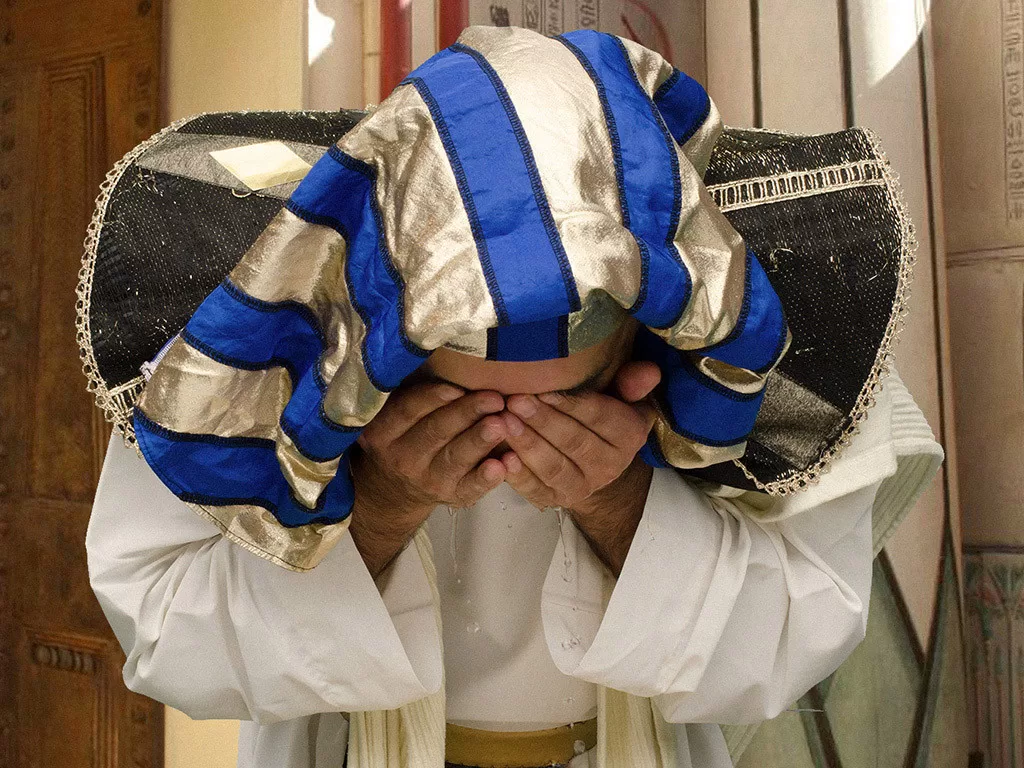
He had Simeon bound and kept in prison while the others were given grain and their money returned to their sacks, along with provisions for their journey.
As the brothers set off for home, they discovered the money in their sacks and were overcome with fear. They returned to Jacob, recounted their ordeal, and pleaded with him to send Benjamin with them to buy more grain. After Jacob reluctantly agreed, he sent Benjamin along with them, along with gifts for the Egyptian official and double the amount of money to cover the returned funds.
When the brothers arrived in Egypt, they presented Benjamin to Joseph, who arranged a lavish feast for them. As they were seated in order of their ages, from the eldest to the youngest, they marveled at the arrangement. Benjamin was given five times more food than anyone else. Joseph then instructed his steward to fill the brothers’ sacks with grain, secretly placing his silver cup in Benjamin’s sack.

The next morning, Joseph sent his steward to pursue the brothers and accuse them of theft. The steward searched their sacks and found the cup in Benjamin’s. The brothers, devastated, returned to Joseph, and Judah pleaded for Benjamin’s release, offering himself as a substitute slave to ensure Benjamin’s safety.
Joseph could no longer contain his emotions and sent everyone out of the room except his brothers. Revealing his identity, he wept loudly, overwhelmed with emotion. The brothers, initially terrified, were reassured by Joseph. He explained that it was not their fault but rather God’s plan to ensure their survival during the famine. He instructed them to return to Canaan, bring their father and their entire family to Egypt, and settle in the land of Goshen, where he would provide for them.
Joseph embraced Benjamin and then all his brothers, showering them with gifts and provisions for their return journey.

When the brothers returned to Canaan and shared the news with their father, Jacob was stunned and overjoyed. The entire family, along with their possessions and livestock, moved to Egypt, where Joseph welcomed them warmly.
In Egypt, Jacob, also known as Israel, and his family flourished. As Joseph grew older and approached the end of his life, he made his brothers swear to take his bones with them when God led them out of Egypt to the promised land. With his final words, Joseph affirmed God’s promise and his faith in the future of his people.
