

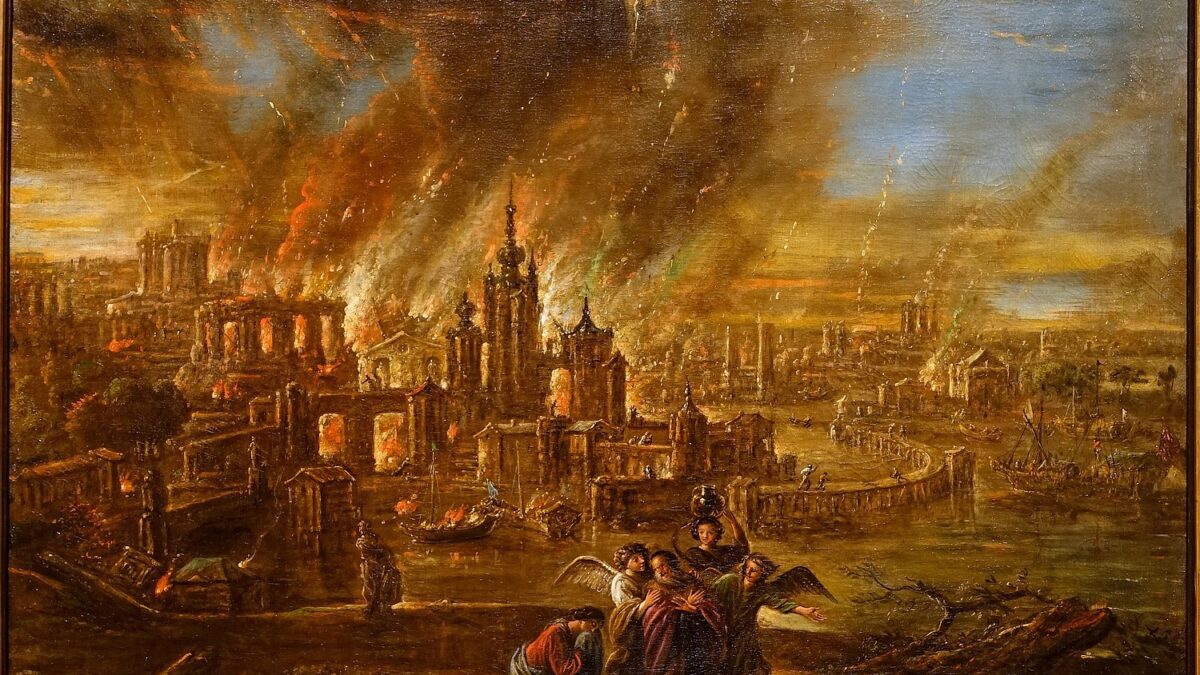
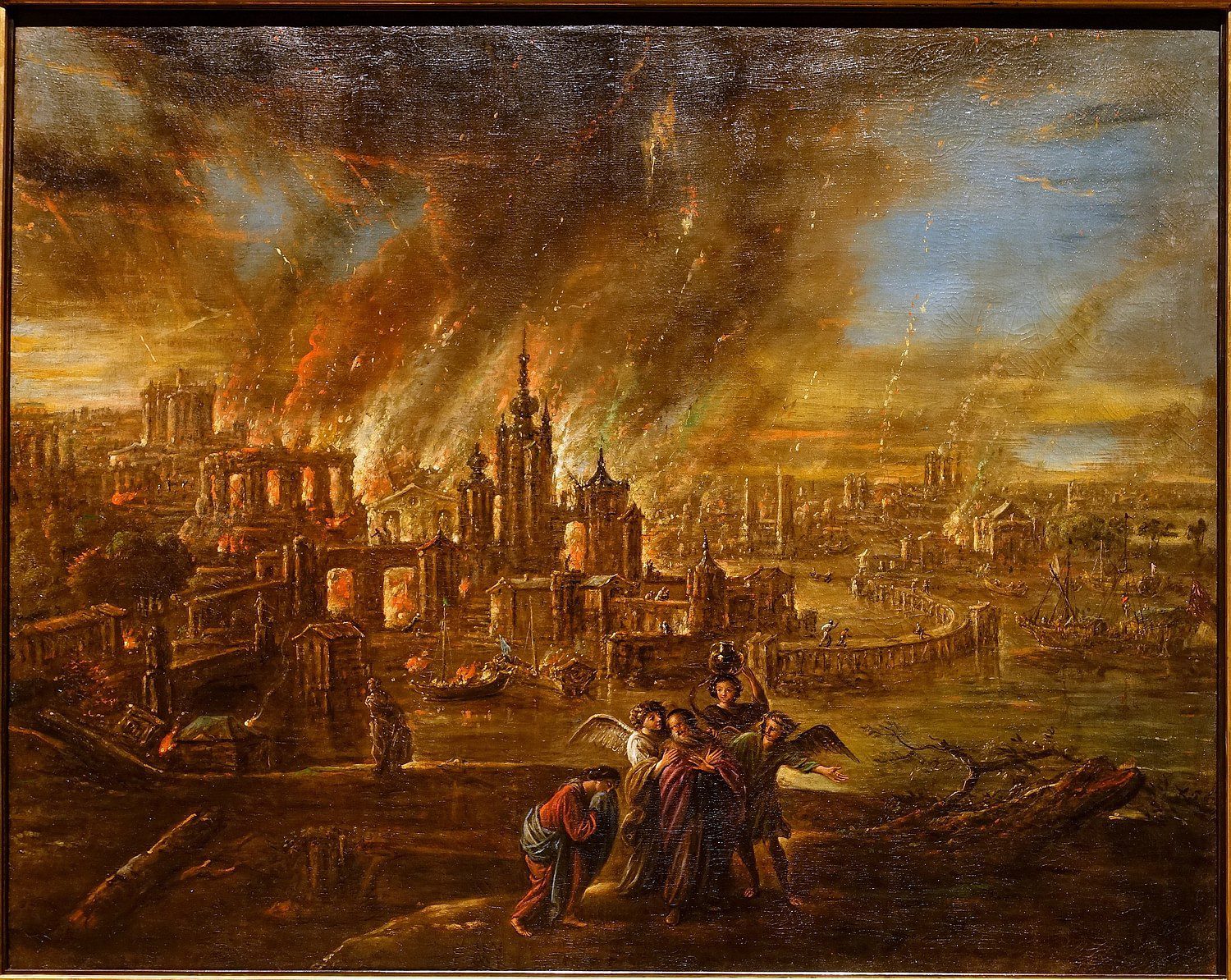
Over 4,000 years ago, around 1900 BC, there existed two twin cities named Sodom and Gomorrah. These cities boasted beautiful, lush valleys and fertile plains on the east side of what is now the modern-day kingdom of Jordan. However, the people of Sodom and Gomorrah were steeped in grave sins against God, including rampant sexual immorality, such as acts of homosexuality, which the Lord found abhorrent.
Amid this sinfulness lived a man named Lot, the nephew of Abraham, a great patriarch renowned for his unwavering faith in God. Unlike the citizens around him, Lot was a righteous man who endeavored to live by the principles he had learned from Abraham. He resided in Sodom with his wife and two daughters, striving to maintain a life of integrity amid rampant wickedness.
God shared His intention to destroy these cities with Abraham, burdening Abraham’s heart with sorrow, especially knowing that his nephew Lot was among the inhabitants. In an effort to save the cities, Abraham humbly approached God, pleading, “Will You sweep away the righteous with the wicked? What if there are fifty righteous people in the city? Will You still destroy it and not spare the place for the sake of the fifty righteous people within it?”
God listened to Abraham’s plea and replied, “If I find fifty righteous people in the city of Sodom, I will spare the whole place for their sake.” Encouraged, Abraham persisted, gradually lowering the number of righteous people required for the cities to be spared until he reached ten. God assured Abraham, “For the sake of ten righteous people, I will not destroy the city.”
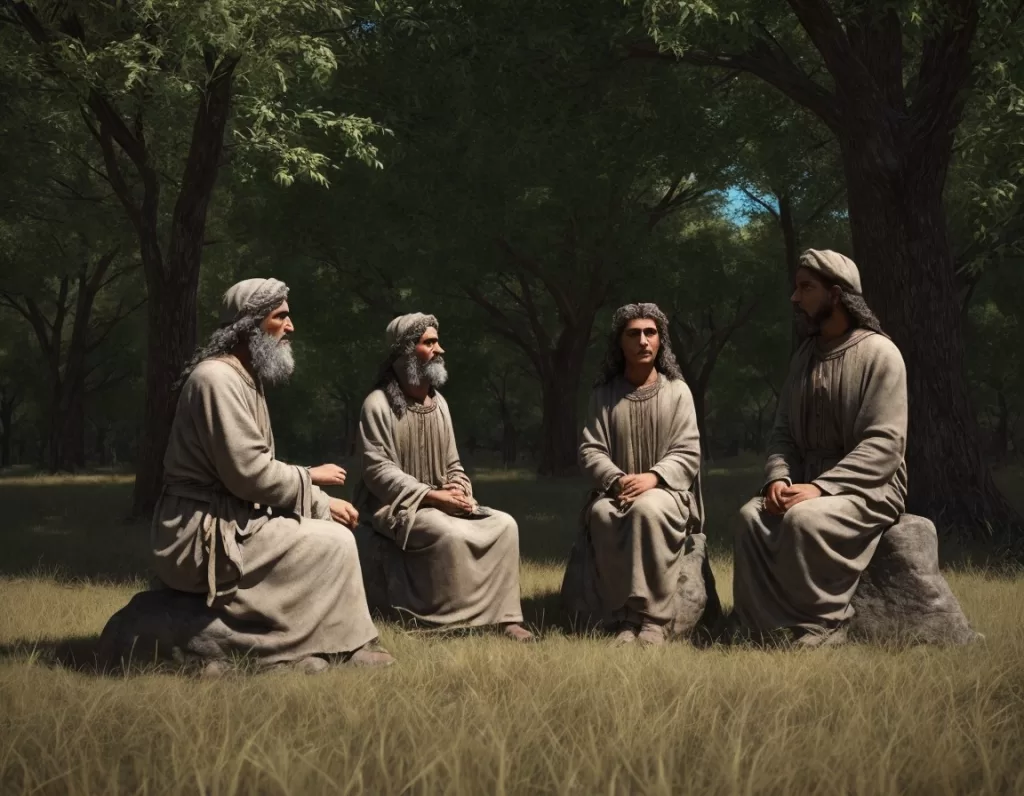
With hope, Abraham returned home, trusting in the Lord’s mercy. Meanwhile, two angels, disguised as travelers, were sent to Sodom to assess the situation. As they arrived at the city gates, they encountered Lot, who recognized their divine nature and invited them to spend the night at his home, offering them a place to rest and refresh themselves. Though the angels initially declined, preferring to stay in the town square, Lot insisted, fearing for their safety in the unruly streets of Sodom. Eventually, the angels agreed and followed Lot to his house.
Lot prepared a feast for his guests, baking bread without yeast and serving them generously. However, before they could retire for the night, the men of Sodom surrounded Lot’s house. From every corner of the city, young and old alike gathered, demanding that Lot bring out the strangers so they could engage in immoral sexual acts with them.
Lot stepped outside, closing the door behind him, and pleaded with the mob not to commit such a wicked act. “Please, my friends, don’t do this terrible thing,” he implored, even offering his two daughters to the crowd in a desperate attempt to protect his guests. But the men of Sodom were relentless and pushed Lot aside, preparing to break down the door.
Seeing the escalating danger, the angels intervened, pulling Lot back into the house and striking the men outside with blindness, leaving them groping in confusion, unable to find the door. Then, the angels revealed their purpose to Lot, instructing him to gather his family and flee the city immediately, as the Lord had sent them to destroy it due to the outcry against its people.
Lot hurried to warn his sons-in-law, who were pledged to marry his daughters, urging them to leave the city. However, they thought he was joking and refused to take him seriously. As dawn approached, the angels urged Lot to take his wife and daughters and flee the city without delay. “Hurry! Take your wife and your two daughters who are here, or you will be swept away when the city is punished.”
Despite the urgency, Lot hesitated, so the angels grasped his hand, along with the hands of his wife and daughters, and led them safely out of the city. The angels instructed them, “Flee for your lives! Don’t look back, and don’t stop anywhere in the plain! Flee to the mountains or you will be swept away!”
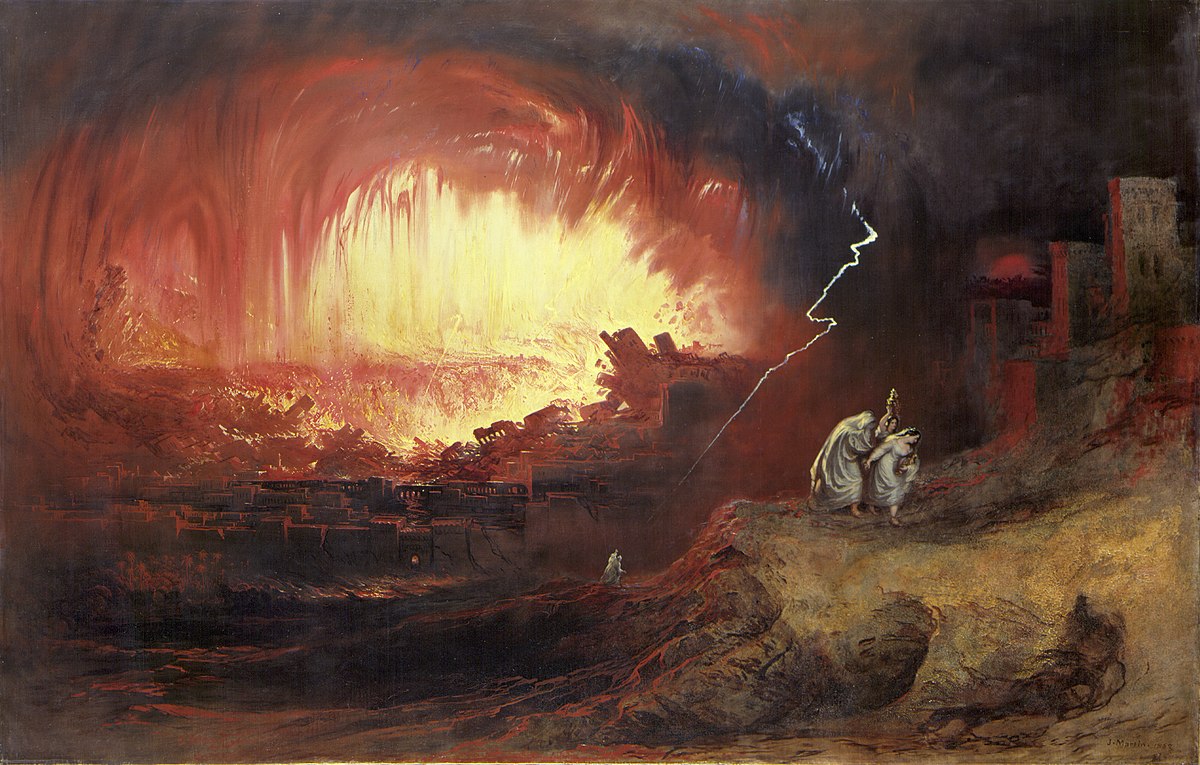
As they fled, the Lord rained down burning sulfur on Sodom and Gomorrah, engulfing the cities in flames and smoke. The entire landscape was transformed into a desolate wasteland, with everything destroyed, including the vegetation. Tragically, Lot’s wife looked back, yearning for the life she was leaving behind, and she was instantly turned into a pillar of salt—a stark reminder of the consequences of disobedience.
Lot and his daughters continued their escape to the safety of the mountains. The once-thriving cities of Sodom and Gomorrah were no more, reduced to ashes by the wrath of God. Their story serves as a powerful reminder of the consequences of turning away from divine teachings and the importance of maintaining righteousness in a world where moral boundaries are often blurred.
The Bible teaches that sexual immorality is a sin, which includes adultery, homosexuality, unnatural sexual practices, and fornication. Consider these scriptural references:
Hebrews 13:4: “Marriage should be honored by all, and the marriage bed kept pure, for God will judge the adulterer and all the sexually immoral.”
1 Corinthians 6:9: “Or do you not know that wrongdoers will not inherit the kingdom of God? Do not be deceived: Neither the sexually immoral nor idolaters nor adulterers nor men who have sex with men.”
Galatians 5:19-21: “The acts of the flesh are obvious: sexual immorality, impurity, and debauchery; idolatry and witchcraft; hatred, discord, jealousy, fits of rage, selfish ambition, dissensions, factions, and envy; drunkenness, orgies, and the like. I warn you, as I did before, that those who live like this will not inherit the kingdom of God.”
These verses and the story of Sodom and Gomorrah underscore the seriousness with which God views sexual immorality and the call for believers to live by His holy standards.
