

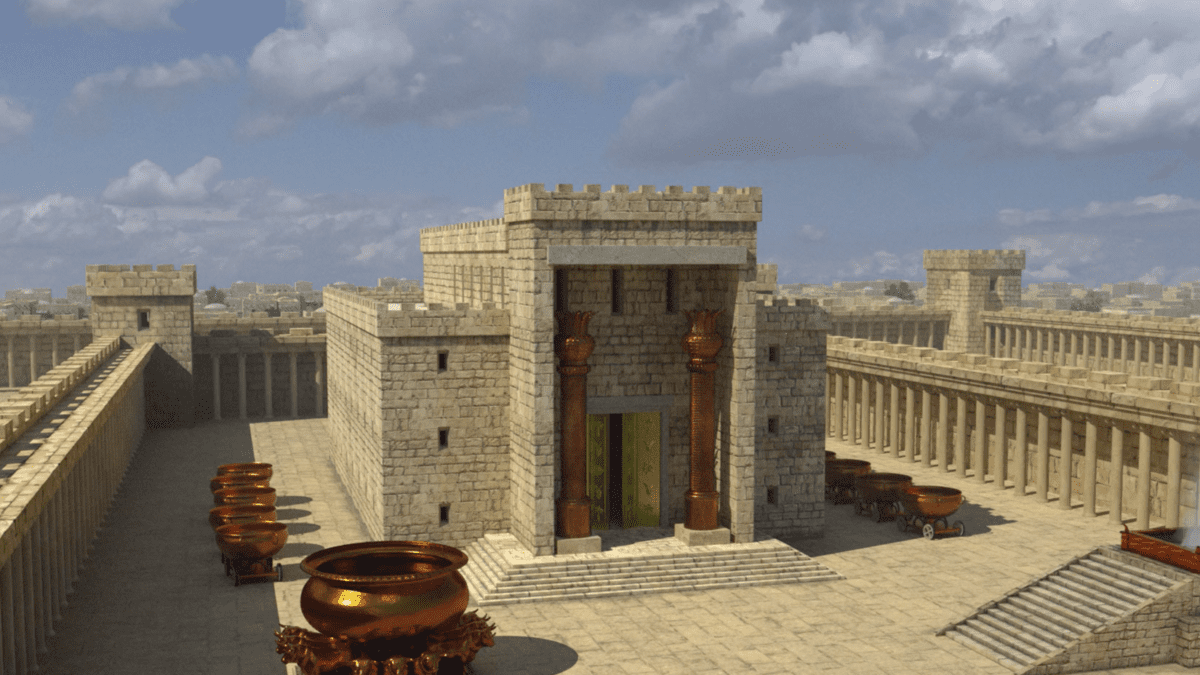
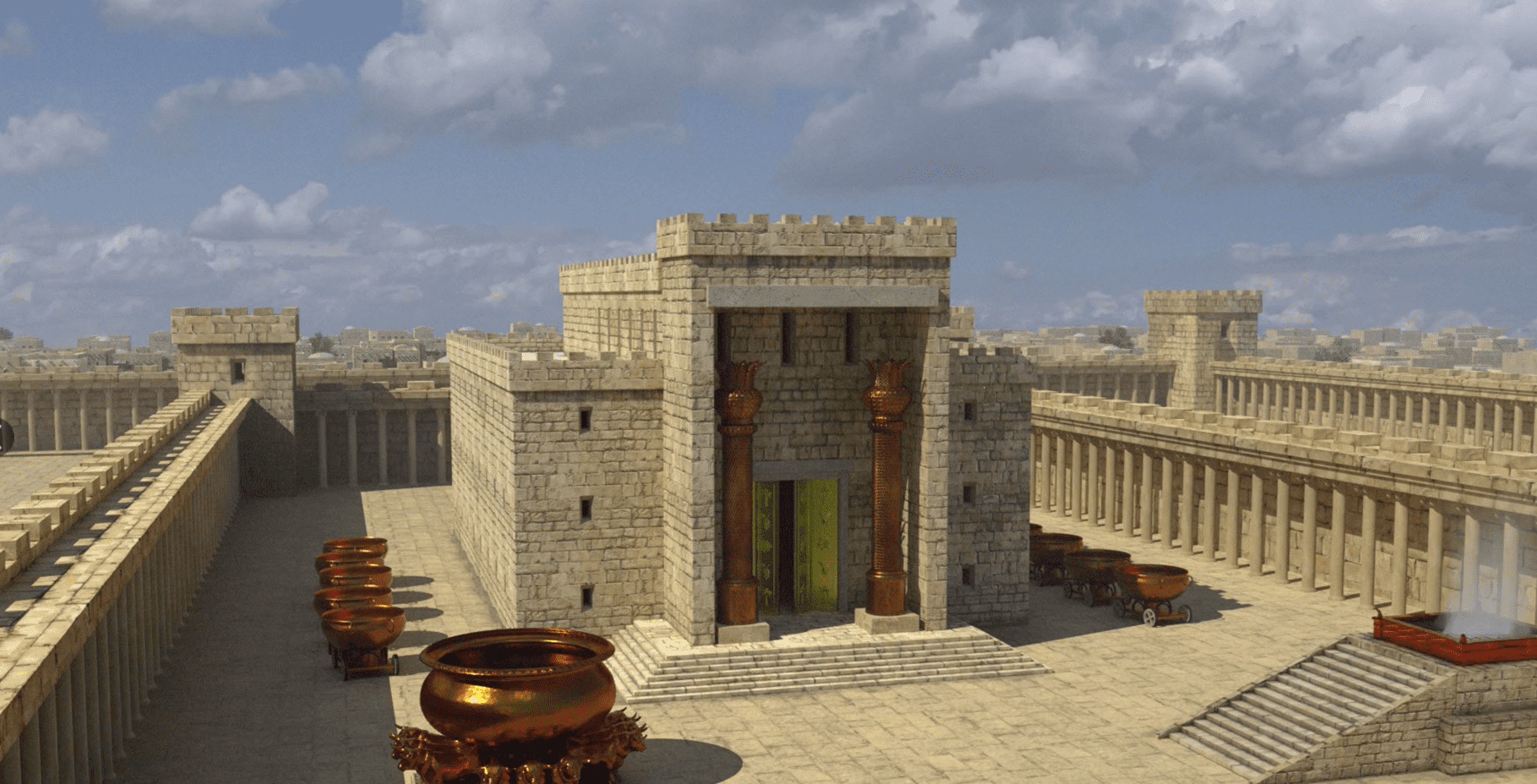
Image Credit: Jeremy Park, Bible-Scenes.com
In the heart of ancient Israel, a new king rose to power—Solomon, son of the great King David. Solomon’s heart was heavy with the responsibility of leading his people, yet God’s peace rested upon him. With no wars to distract him, Solomon turned his attention to something far more profound than battle—he would build a temple for the Name of the Lord, a place where the God of Israel would dwell.
It was no ordinary project. This was the dream of his father, David, left unfulfilled due to the constant wars that plagued his reign. But now, with peace on every side and no enemies or disasters in sight, Solomon was determined to honor his father’s wish. He reached out to a trusted ally—Hiram, the king of Tyre, a friend of David who had long been loyal to Israel.
When Hiram received Solomon’s message, he was pleased. “Praise be to the Lord,” he said with a smile. “He has given David a wise son to rule over this great nation.”
Solomon’s request was simple yet grand: “Send me cedars of Lebanon, the finest wood, to construct a house for the Name of the Lord. Your men, skilled in the art of felling timber, will work with mine. I will pay whatever you ask.” Hiram agreed without hesitation, offering not only the cedar but also juniper logs. The trees would be floated down the Mediterranean Sea as rafts to the destination Solomon specified.
In exchange, Solomon provided Hiram with an abundance of wheat and olive oil, year after year, solidifying the bond between their nations. And so, with cedar and stone, gold and silver, the work began.
The construction was a massive undertaking. Solomon conscripted thirty thousand men from Israel, sending them to Lebanon in rotating shifts. They worked alongside seventy thousand carriers and eighty thousand stonecutters in the hills, all under the watchful eyes of thirty-three hundred foremen who directed the labor. The blocks of stone they used were large and of the highest quality, dressed at the quarry so that no iron tool was heard at the temple site itself—a place of reverence even during its construction.
The temple grew, its foundation laid, and its walls rose high. Cedar lined the walls from floor to ceiling, carved with delicate designs of gourds and open flowers. The inner sanctuary, the Most Holy Place, was prepared with great care, its walls and altar overlaid with pure gold. Within this sacred space, Solomon would later place the Ark of the Covenant, resting beneath the wings of two cherubim made of olive wood, their wings stretching across the sanctuary. Everything in the inner sanctuary was overlaid in gold, from the altar to the door frames—a place worthy of the God who created Heaven and Earth.
Even the smallest details bore significance: intricate carvings of palm trees, cherubim, and open flowers adorned the walls. Every basin, every lampstand, and every tool had its place, fashioned from pure gold or burnished bronze by Huram, a master craftsman summoned by Solomon.
Seven years passed, and at last, the temple stood complete—its grandeur unparalleled, its purpose divine. Solomon gathered all of Israel’s leaders, summoning the elders, the heads of tribes, and the chiefs of families to Jerusalem. Together, they brought the Ark of the Covenant from Zion, the City of David, to its new resting place within the temple’s inner sanctuary. As the priests carried the sacred objects, the entire assembly offered sacrifices—so many that they could not be counted.
With great reverence, the priests placed the Ark beneath the cherubim’s wings, and as they withdrew, the temple filled with a cloud—the glorious presence of the Lord. So overwhelming was this divine cloud that the priests could not perform their duties. Solomon, witnessing this moment of profound intimacy between God and His people, stood before the assembly and blessed them.
Solomon had fulfilled the desire of his father and the command of God. The temple stood as a testament to the Lord’s faithfulness—a magnificent dwelling where His Name would reside. The people of Israel rejoiced, for their king had led them in worship and in the completion of the greatest structure their nation had ever seen.
Yet Solomon knew, as the Lord had said, that the temple was not merely a building of stone and gold—it was a symbol of God’s promise. As long as the people followed His decrees and obeyed His commands, His presence would dwell among them forever.
